
The Real-World Utility of Ford F-150 Lightning Towing
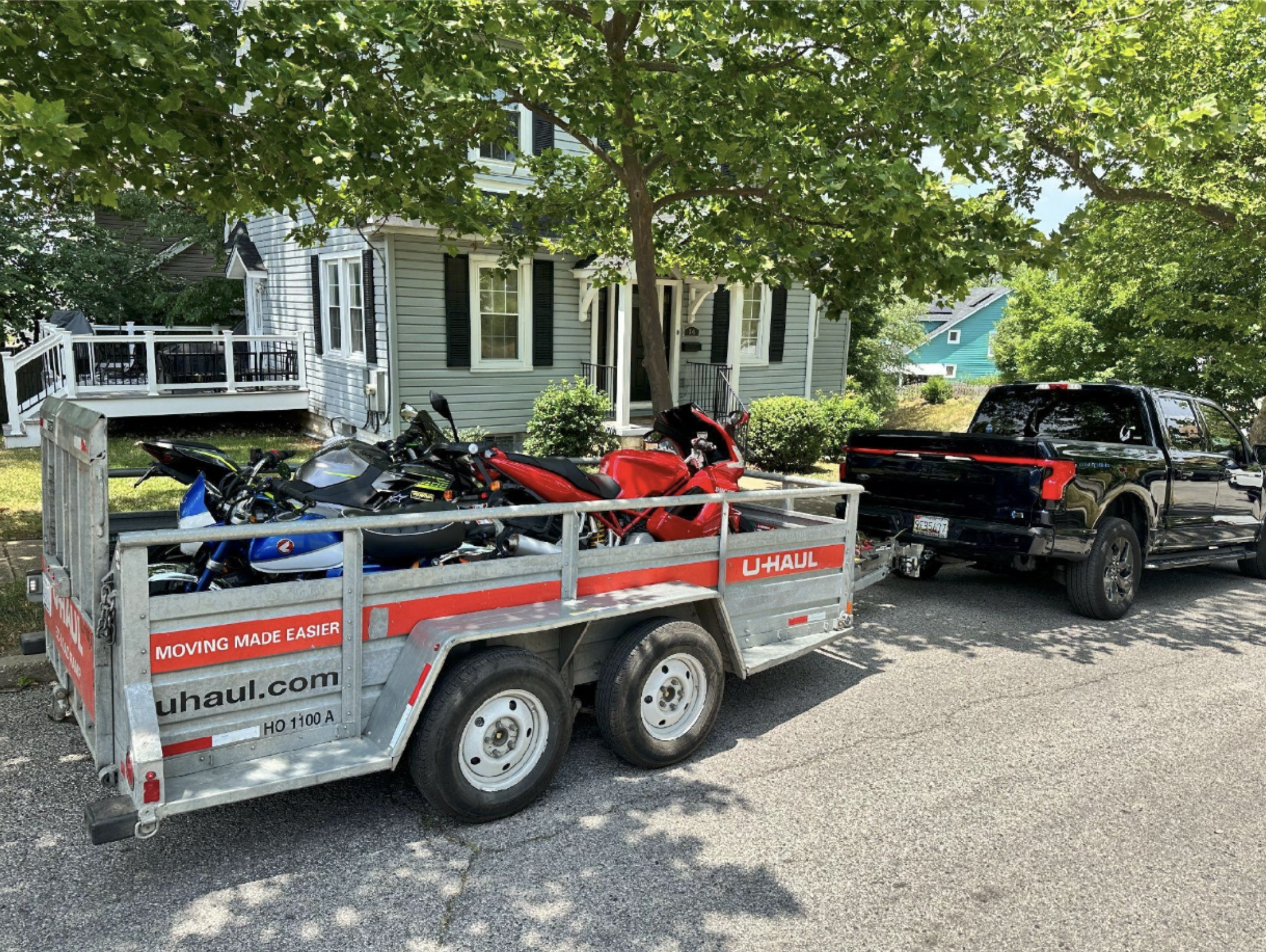
When fleet managers evaluate transitioning to electric models, their biggest questions often center around operational resilience and capability under a heavy payload. How does the Ford F-150 Lightning towing capacity hold up in field operations? Will running tools off the battery leave my crew stranded?
Sawatch Labs, a WEX company, analyzes telemetry to measure vehicle performance. Below, Libby Bittman, director of business development for the EV and mobility team at WEX, shares her account of what electric truck utility looks like under pressure.
Real-World Fleet Capabilities: From Press Conferences to Power Outages
I have been driving fully electric vehicles for over a decade and riding electric motorcycles for the past five years. My husband, Matt, is a self-employed sound engineer and pre-ordered a Ford F-150 Lightning in 2021 for its proposed capabilities. For his work, Matt needs to travel a great deal—working on productions as wide-ranging as the Preakness horse race in Baltimore, Maryland and every presidential inauguration in DC since 2009. We were desperately in need of a pickup truck for his business, and couldn’t believe we survived as long as we had shoving gear into my Chevrolet Bolt and his Tesla Model 3 Performance.
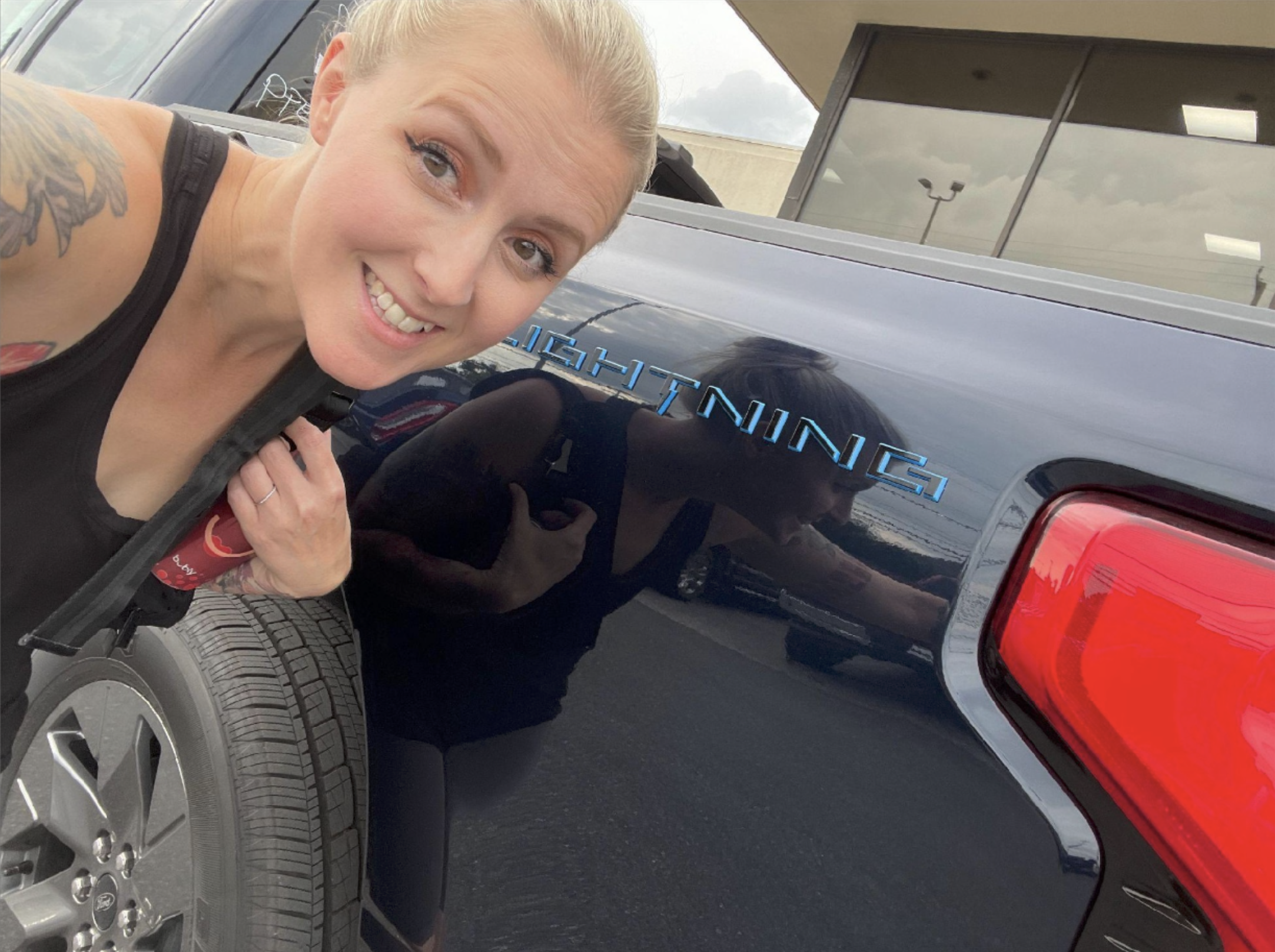
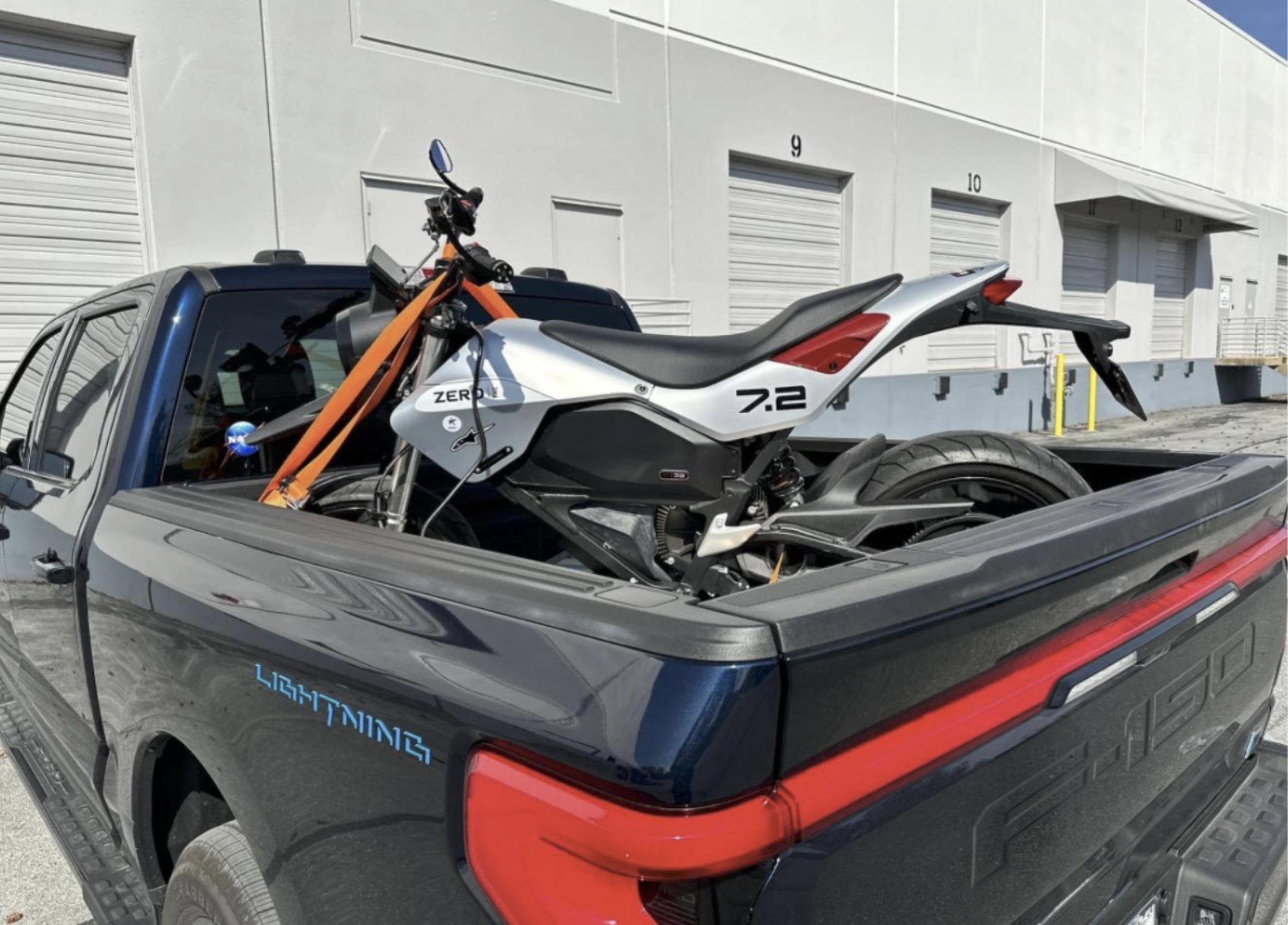
We traded in our Model 3 Performance for the F-150 Lightning in 2022 and have not regretted it. With 9kW of onboard power, the official Ford F-150 Lightning towing capacity of 10,000 lbs meant this truck would more than meet our needs. Matt regularly tossed our Zero FXE electric motorcycle in the truck bed and charged it while driving to gigs, where he would then use the Zero onsite. We have also:
Towed multiple motorcycles across state lines.
Powered press conferences with the truck
Used the truck as backup power at home during the harrowing Snowcrete weather incident in late January 2026.
Testing Vehicle to Load Power in 95-Degree Heat
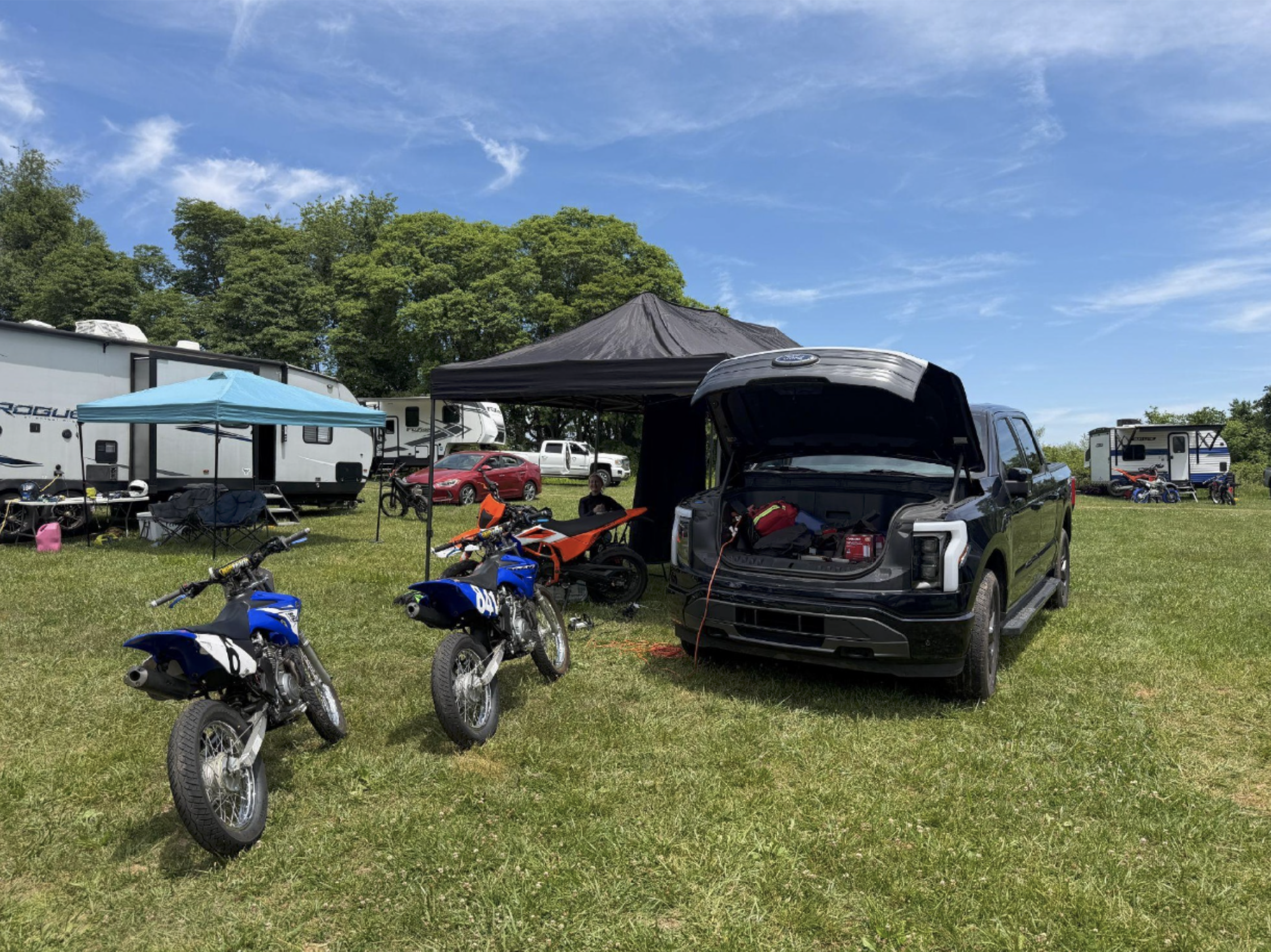
Last week, we were able to take the truck to our first mini moto experience at Sandy Hook Speedway in Street, Maryland. We loaded up the F-150 with a giant pop-up tent, our KTM 390 SMC r motorcycle, plug-in fans since it was going to be well over 95 degrees that day, a ton of tools, folding chairs, ramps, all our gear, and a cooler full of food.
We started the day at 7 a.m. with a full battery at 330 miles of range and drove 35 miles to the track, which was mostly highway. Here’s what the truck provided for the day:
We had the air conditioning in the truck on full blast until we left the track at 3 p.m.
We had one box fan and one industrial fan plugged in and running on high all day.
We had tool batteries plugged in and charging all day,
We had Apple Music supplying all the hits in the background.
We drove home another 35 miles and got home with 250 miles of range.
Using all of that on board vehicle to load power barely touched our range, even with over 500lbs of cargo - not including us!
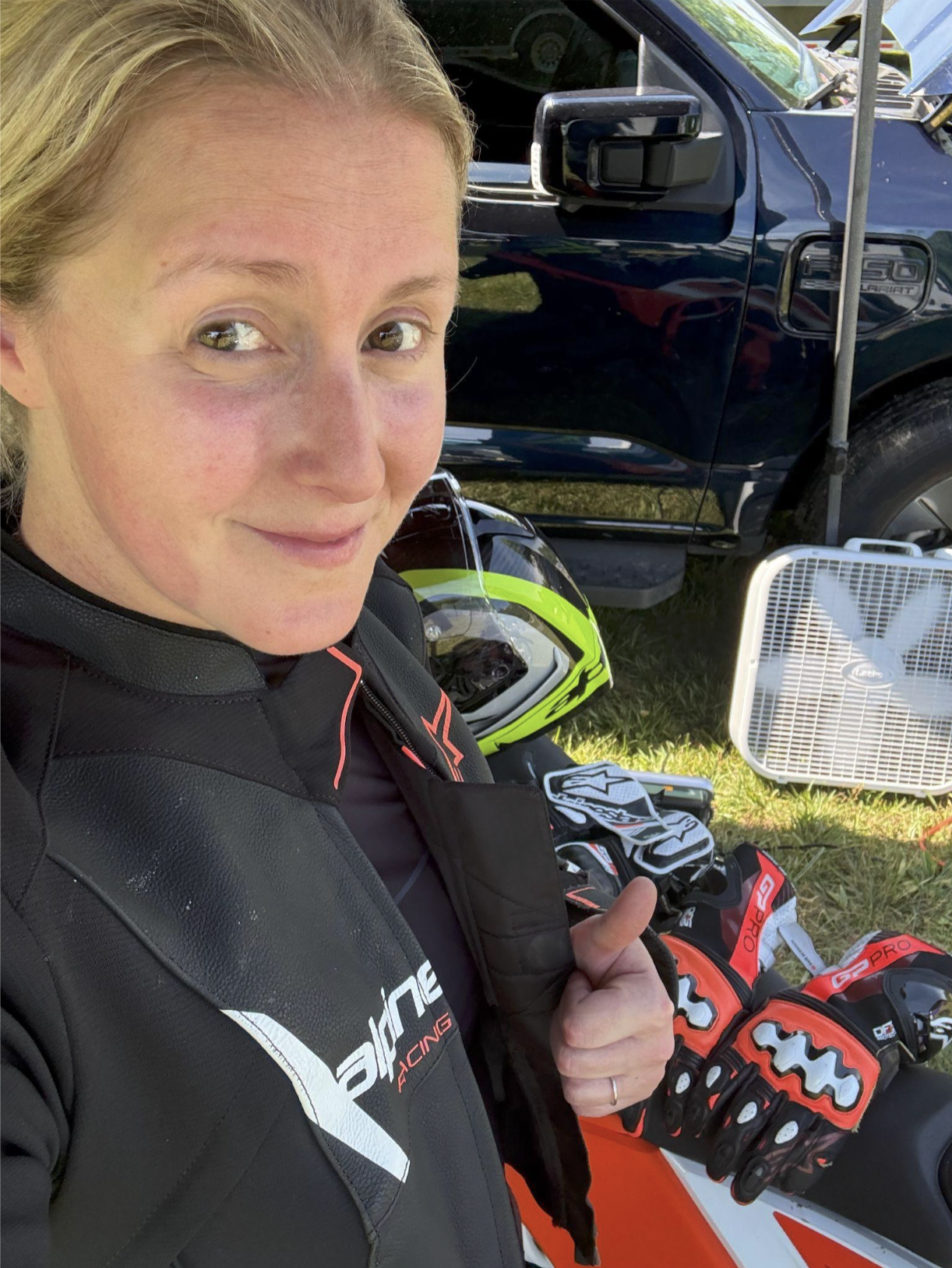
Me almost dying of heat stroke, but these fans plugged into the Ford Lightning helped me stay cool and survive the day!
The High-Fidelity Data Breakdown
For fleet managers calculating energy demands, my track day provides an incredible micro-dataset on real-world power draw:
Starting Range: 330 miles
Miles Driven: 70 miles
Total Payload: 500+ lbs of cargo
Stationary Draw: 8 hours of continuous AC, industrial fans, and tool battery charging
Ending Range: 250 miles
The Takeaway: Running a high-demand, mobile job site via vehicle to load exportable power for a full day consumed a mere 10 miles of baseline driving range.
The Verdict on Electric Work Trucks
Bringing the Ford F-150 Lightning into our home was one of the best decisions we have ever made. It’s a shame that Ford is discontinuing this incredibly useful vehicle. I hope that the new $30k truck that Ford is proposing is able to do a fraction of what our truck can do and that it will help increase EV adoption across the board.
The fleets we work with at WEX that do use Ford F-150 Lightnings love them. If you can find a used one and have been considering this truck, there are phenomenal used deals available currently. I highly encourage you to go for it! Having trouble finding an F-150 Lighting? Consider the Chevrolet Silverado EV.
Electric trucks are awesome and can do it all, and I am proud to own one.
Building your mixed-energy fleet in an Evolving EV Market
The EV manufacturing landscape is evolving quickly, with shifting timelines for some models and new models emerging. For commercial and government fleets, this volatility in model availability and varying vehicle specifications makes data-driven procurement vital.
You don't have to guess how a vehicle's payload capacity or energy export systems will impact your bottom line. With Sawatch Labs' ezEV software, you can analyze your fleet’s telemetry data, and work with Sawatch to build a precise suitability assessment. This assessment is tailored to your range, towing, and auxiliary power needs.
Ready to find the perfect electric truck for your duty cycles? Learn more about Sawatch, and contact us today.