
How Does EV Towing Perform in America’s National Parks?
Towing with an electric vehicle is often seen as one of the final frontiers of EV adoption—especially when the journey leads into remote, mountainous terrain. From concerns about range and charging access to the impact of elevation and weather, long-haul EV towing can feel daunting. During a week-long road trip from Denver through Grand Teton and Yellowstone National Parks, Ali Walling, Senior Manager of Marketing at WEX, put those concerns to the test by towing a teardrop trailer with a Rivian R1S. In this blog, she shares what worked, what surprised her, and how smart planning turned range anxiety into a manageable variable.
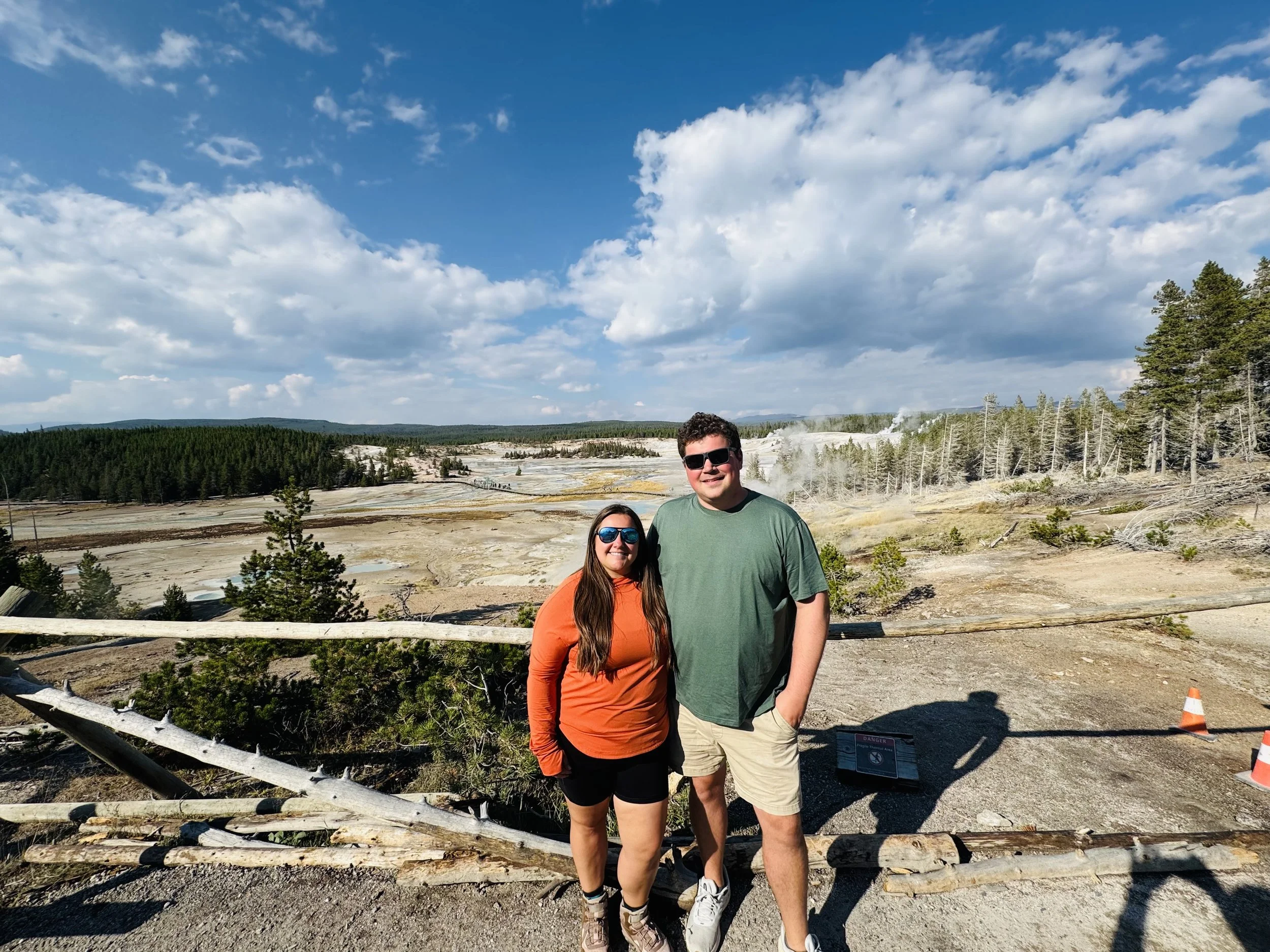
Preparing for a Long-Haul EV Towing Adventure
My husband and I are fully bought in that electric is the future of vehicles. So much so, that when we needed a vehicle to tow our new teardrop trailer, we immediately decided to embrace towing with a fully electric option. There are so many great options on the market like the Ford F150 Lightning, the Chevy Silverado EV, or the Kia EV9 that it was hard to decide, but ultimately, we went with my dream car, the Rivian R1S.
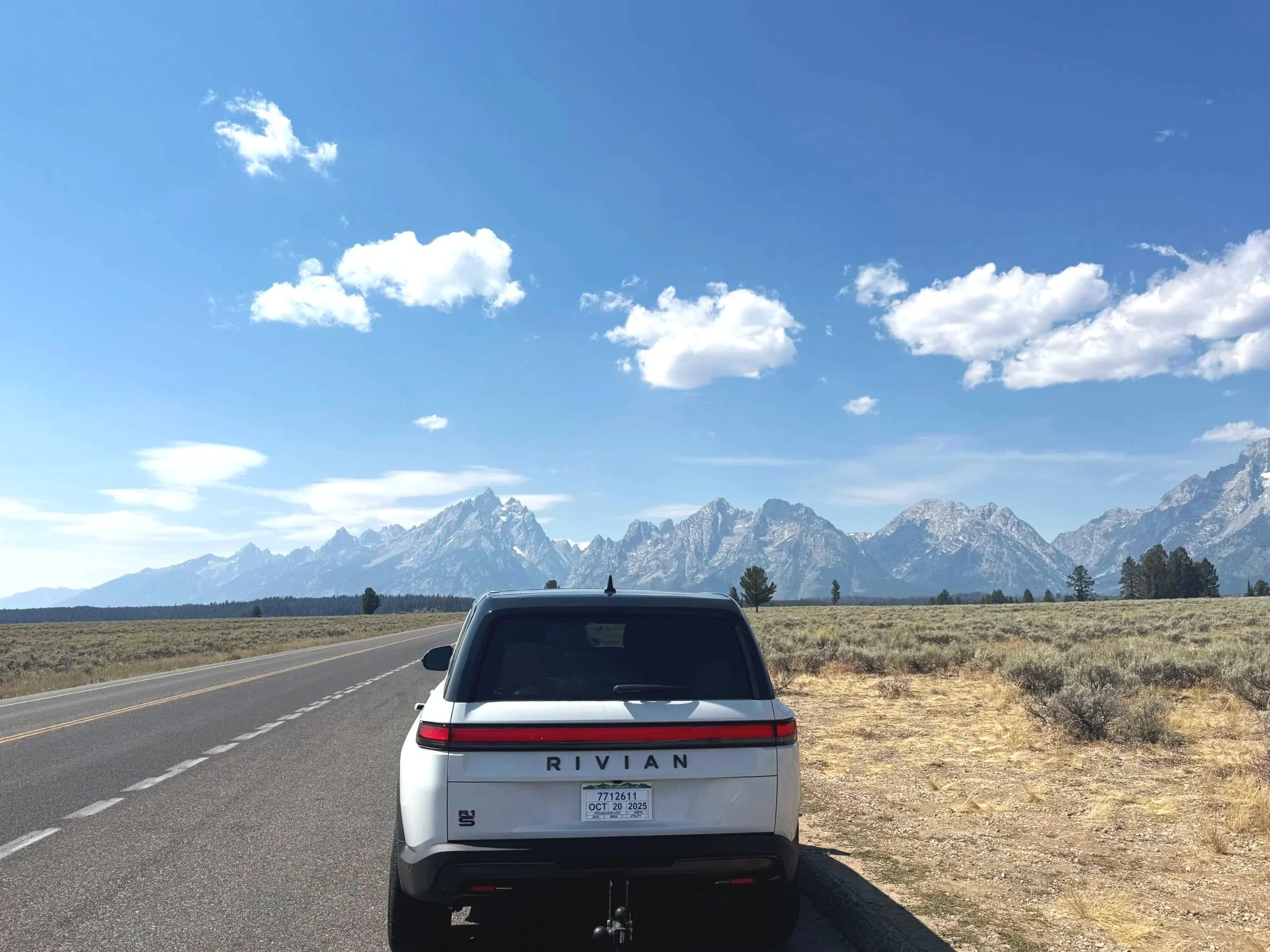
Not only does it have a robust 7,500lb towing capacity, but with three rows and a middle tier battery of 330 miles of range, it makes up the ultimate road trip and adventure vehicle—towing or not.
Everyone told us that it’s too difficult and inconvenient to tow a trailer into the Rockies or through remote areas. So, of course, we set out to prove everyone wrong. A short weekend camping wouldn't cut it; that’s too easy and wouldn't test the true limits of an EV. We decided on a week-long trip from Denver, through Grand Teton National Park, into Yellowstone National Park, and back, all with our Rivian R1S and 2,000lb teardrop trailer.
The Reality of EV Towing: Range and Planning
The first thing everyone asks about towing with electric is its impact on range. No matter what the energy source, whether it’s fossil fuels or electricity, hauling a literal extra ton of gear is going to reduce your efficiency. As expected, we did see a drop in efficiency of about 20-35% as compared to our everyday use of the Rivian.
Although we experienced an efficiency trade-off for carrying our adventure setup, this reduction was predictable and manageable.The Rivian R1S excelled and the vehicle’s “Trailer” mode quickly utilized all the necessary driving data to provide impressively accurate range forecasting. The guesswork was eliminated, and we could rely on the vehicle's onboard intelligence.
Long-haul EV Towing Begins with Smart Planning
With a new effective towing range of around 200+ miles, route mapping became the most critical part of our preparation. We stopped about every 200 miles, always ensuring our charging stops were within a safe buffer. We leaned heavily on specialized tools for this:
WEX DriverDash App: For locating reliable charging stops and availability.
PlugShare: For scoping out if chargers were trailer friendly and reading additional reviews about the amenities.
By treating the reduced range not as an obstacle, but as a known variable in our trip strategy, we maintained confidence throughout our journey into the remote American West.
Hitting the Road with Our Ultimate Adventure Vehicle
We set off bright and early on Saturday, August 23rd, 2025. For the most part, it was smooth towing, and our charging stops were efficient and uneventful. We enjoyed a wonderful first stop at a Rivian Adventure Network station with a trailer friendly charger that allowed us to pull up next to the charger vs. having to back in or disconnect the trailer to charge. We were also lucky to find a few GM Energy chargers at Pilot Flying J’s that easily accommodated our teardrop trailer. By the time we could grab food and visit the facilities, the charging sessions were done, and we were on our way.
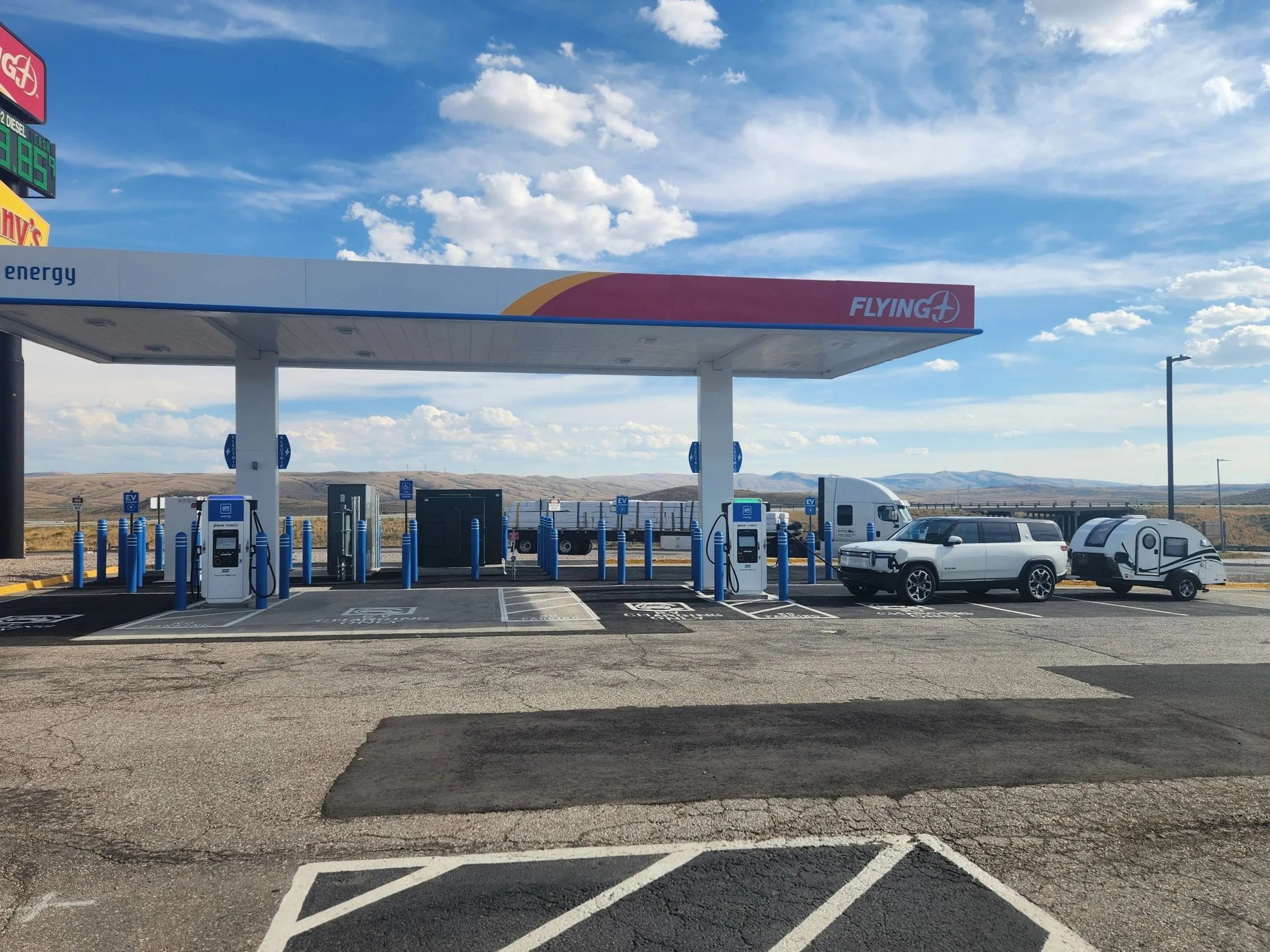
With an effortless early part of the trip , is it really a road trip, is it really a road trip if something unexpected doesn’t come up? While driving through Wyoming, we hit some heavy headwinds paired with a mountain pass with substantial elevation gain. This unforeseen curveball meant we had to add in an additional charging stop at a not-ideal location: a car dealership with only one charger.
When we rolled in, another vehicle had just started charging, meaning we had to wait about 25 minutes. As is often the case when thrown a curve ball, there can be a silver lining., For us, on that particular day, we made a new friend while waiting for our vehicle to charge. Another EV driver waiting for his car to charge, told us the story of his road trip from California to Michigan in a Chevy Bolt. The conversation and sparked friendship were a welcomed reminder of the growing EV community across the U.S.
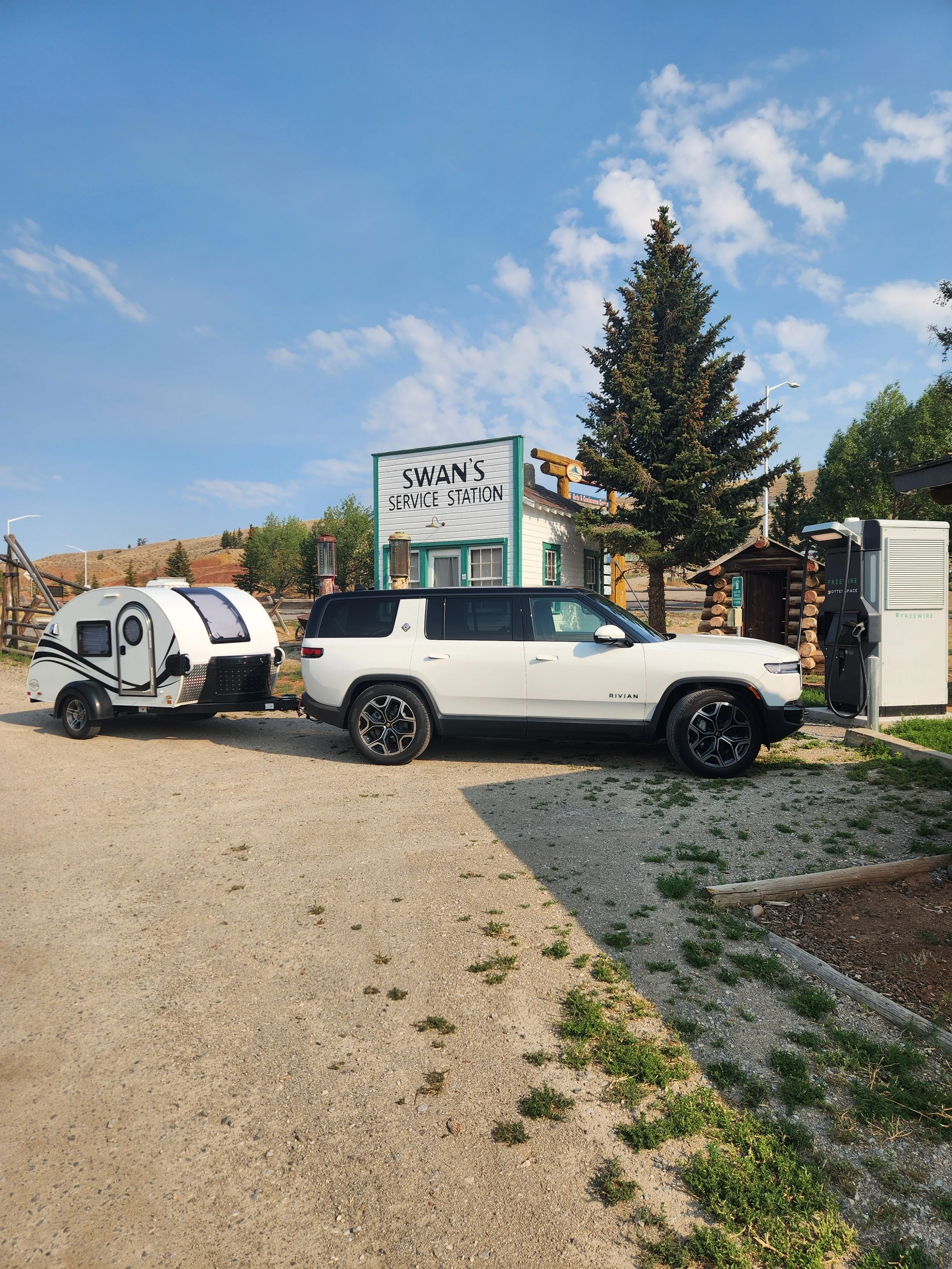
Another fun charging station stop involved an L2 charger with a battery supplement to increase its power to an L3. This charger, outside the Dubois Museum, in Dubois, Wyoming was perfectly situated for a museum visit where we learned about Wyoming history and geography.
Our Secret Weapon: Charging Simplified
Route planning solved range anxiety, but the often fragmented and frustrating charging payment landscape was trickier to solve for. Needing to have what seems like endless apps to charge at different networks, making sure there is a payment method with each, and getting each charger to activate can be overwhelming. This is where WEX EV En Route comes in handy, simplifying all of that chaos into one tap. While this is a commercial product used by fleets, one perk of my work with WEX is the ability to test and use our products to better understand our customer’s experiences.
With one tap of the RFID card or the DriverDash App, charging became simple. No more downloading each network provider’s app to charge—WEX EV En Route encapsulated the experience into one seamless process. Both charging activation and payment with the DriverDash app and RFID card were wonderful. The app accurately showed availability, and let us know if we had to wait at a stop or not. I see why fleet managers and drivers love this product, it makes EV charging quick, painless, and simple!
Taming Range Anxiety in the National Parks
Now to the part that everyone has been waiting to hear about—the National Parks. While these were some of the most breathtaking and unusual landscapes on earth, these parks themselves presented a few unique challenges:
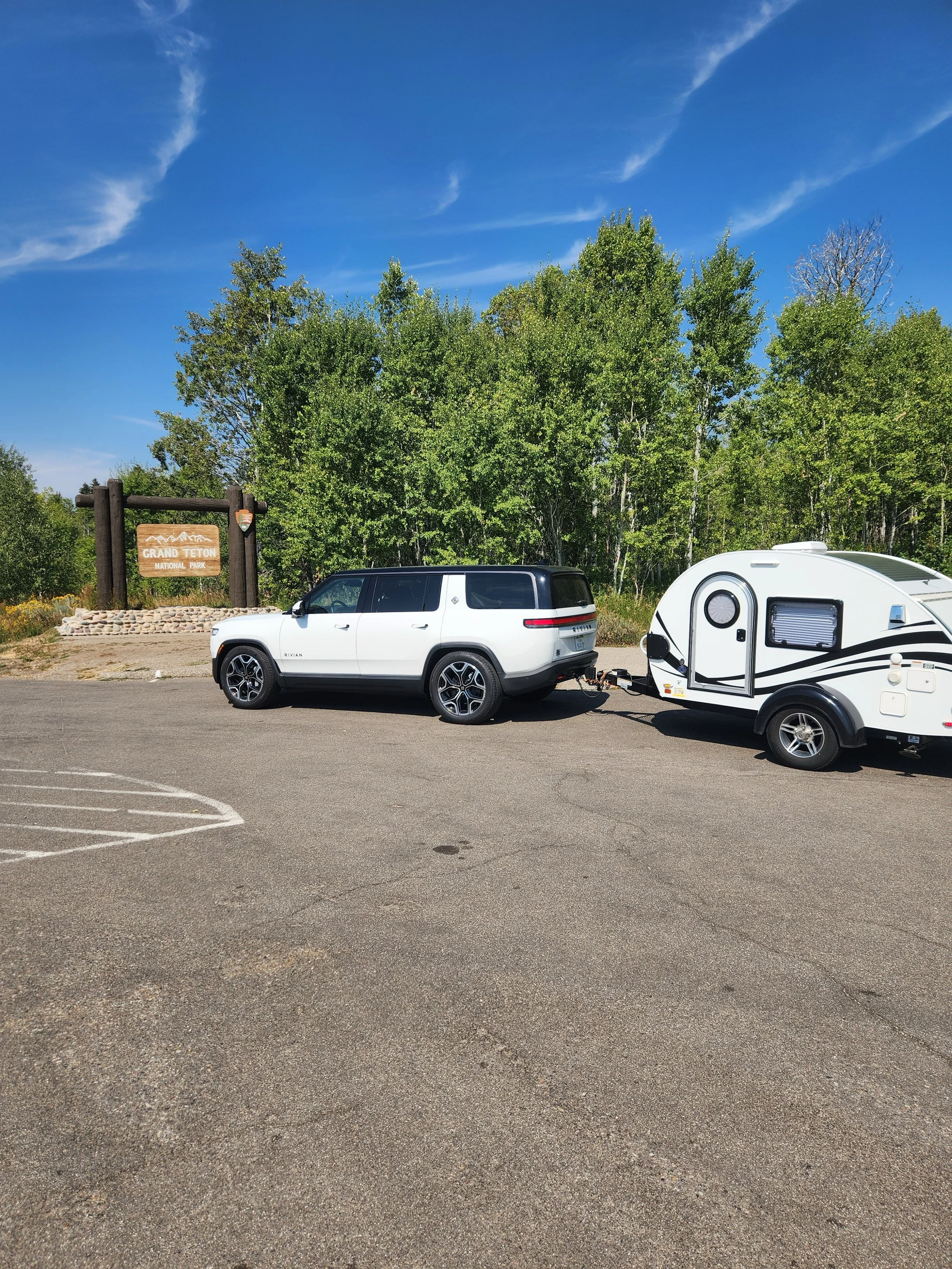
Grand Teton National Park: We spent five days at a campground in the Tetons, driving into Jackson to charge. Knowing that the only fast charger available to us was in Jackson, and we would be driving around the vast park, range anxiety began to emerge. Luckily, “Camp” mode in the Rivian came in very handy here, allowing us to turn off all interior and exterior lights at our campsite and prevent any phantom drain overnight. As the days went on, we realized that the range anxiety was unfounded. When you are driving a park without a trailer, at lower speeds, and with limited wind, the range really is impressive. We were able to drive all around the park for multiple days without needing to charge.
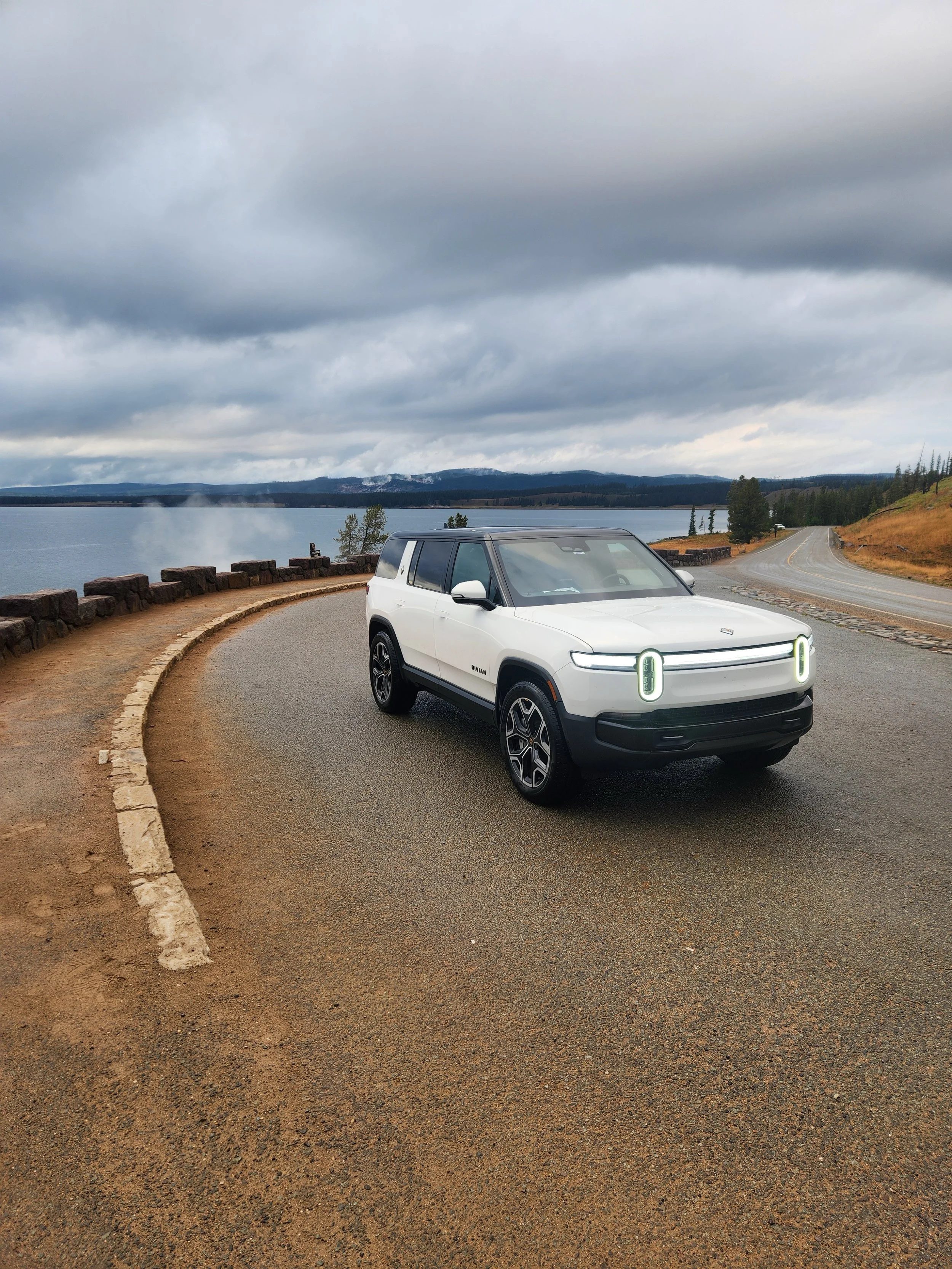
Yellowstone National Park: A new national park meant a new bout of range anxiety, and since becoming stranded in Yellowstone was not on our to-do list, our workaround was to stay at an RV park the entire time we were there. While we prefer the privacy of a dry trailer campground, the RV park allowed us to sleep comfortably and charge up our vehicle. This gave us slow, reliable, overnight charging, which turned our Rivian into Old Faithful and allowed us to see all the stops we wanted without having to stress about finding a charger daily.
EV Towing from a Fleet Perspective: Why Environmental Factors Matter
Our trip highlighted a consideration that extends beyond a single road trip and into the world of commercial fleet electrification, the importance of electrification planning and vehicle suitability.
We saw firsthand how environmental factors like substantial elevation gain instantly increased our energy consumption, forcing an unscheduled stop. This should be accurately modeled and considered in any successful fleet transition plan.
For organizations considering EV adoption, it is not enough to perform simple route mapping. To ensure vehicle suitability and operational success, electrification planning must also consider how environmental factors like weather, elevation change, and temperature affect EV performance.
Organizations like Sawatch Labs, partnering with fleets to provide this analysis,, can be the deciding factor between a positive or negative experience for a fleet. Sawatch’s advanced predictive analytics use minute-by-minute operational data to model these exact environmental factors, confirming whether or not an EV will reliably meet a fleet's needs, even in mountainous or challenging territories.
Electric Towing is a Reality (and Our New Adventure Standard)
Everyone told us that the remote Rockies would expose the limits of EV towing. But our week-long expedition through the Tetons and Yellowstone proved the doubters wrong. The journey wasn’t without its speedbumps, but overall it was a success. We enjoyed the quiet power of the Rivian, the camaraderie at charging stops, and the pure satisfaction of embracing a new technology despite potential challenges.
The trip confirmed that the future of adventure can be electric. With smart planning and choosing a vehicle built for the task, the "range anxiety" often associated with remote travel becomes merely a predictable variable to manage. We learned that towing with an EV is not only doable, but is quite possibly the next standard for enjoyable, responsible, and empowering exploration.
The electric road trip is here, and with the right tools, the path to America's most beautiful natural spaces is now open to the electrified adventurer. The only question we are left with is, where should we take our electrified adventures next?